
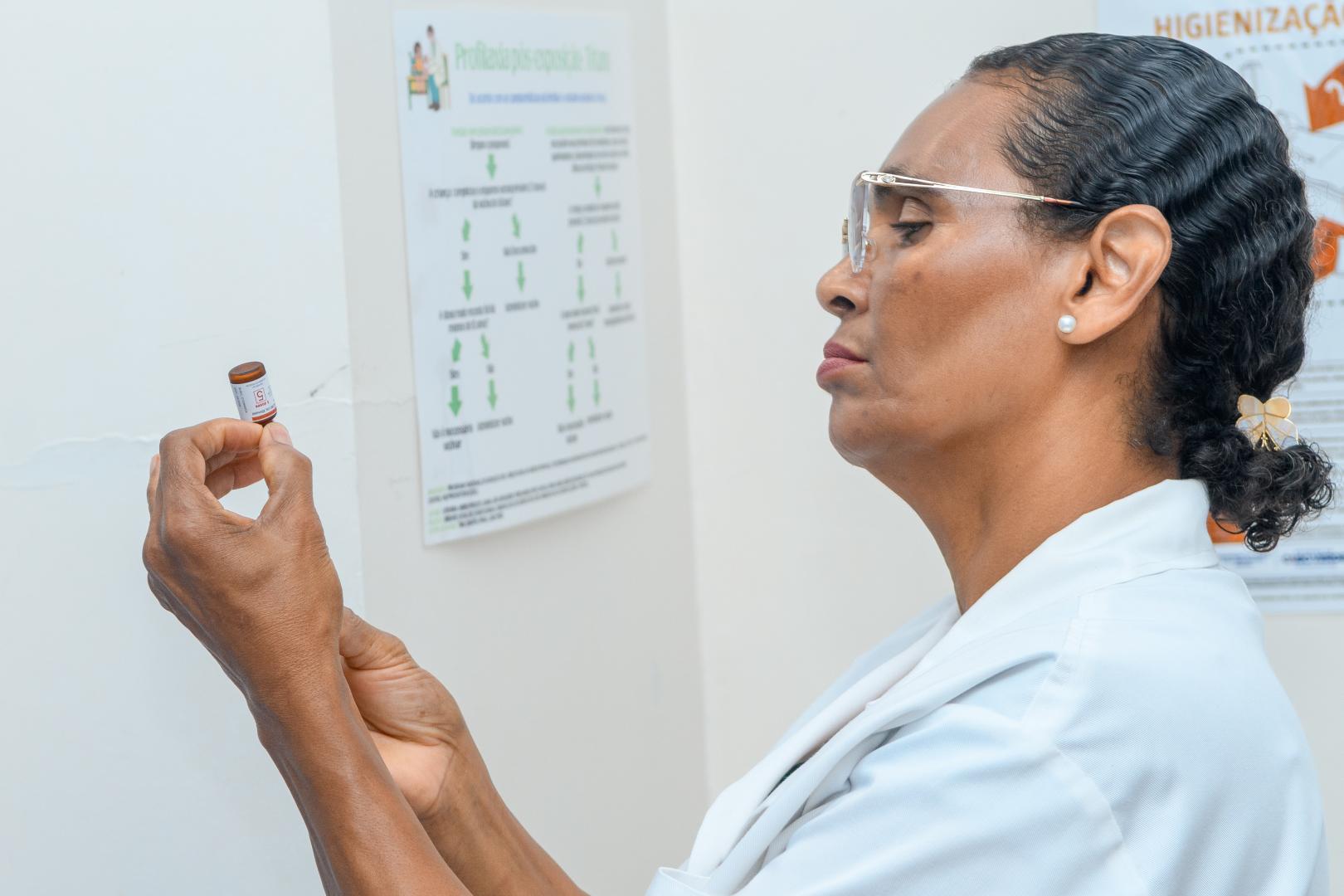
Praia—Under the theme “Vaccinating is protecting—together we build a healthier future for Cabo Verde”, the Ministry of Health launched the introduction of three new vaccines on 22 January 2026. The vaccines—against Rotavirus, the pneumococcal conjugate vaccine PCV-13 and the hexavalent vaccine—were introduced into the national immunization schedule on 2 February 2026. This marks another historic step in ensuring that no child is left behind.
According to Dr Jorge Figueiredo, Minister of Health in Cabo Verde, this step carries great institutional and public policy significance, as vaccines previously available only in the private sector—often at high cost and with access barriers—will now be provided free of charge by Cabo Verde without any form of discrimination. The minister added that, through government investment in partnership with World Health Organization (WHO) and UNICEF, these vaccines will be free across the public health system and available to all Cabo Verdean children, reaffirming that health is a national priority and not a privilege determined by a family’s economic capacity.
He reiterated the government’s commitment to ensuring the sustainability of EPI, guaranteeing predictable financing, a robust cold chain, professional training and rigorous epidemiological surveillance in line with WHO guidance. He also thanked health professionals for their dedication in making the EPI a vibrant reality across the country, along with the trust and adherence of families.
During the launch Dr Ann Lindstrand, WHO Representative in Cabo Verde, highlighted the government’s historic commitment to sustaining vaccine financing through resources from the state budget. She emphasized that political leadership, public trust and sustainable financing remain essential pillars of the success of Cabo Verde’s Expanded Programme on Immunization (EPI).
She further noted UNICEF’s financial support—through the local UNICEF office and the Portuguese National Committee for UNICEF—of US$ 70 000 for the purchase of 15 000 doses of Rotavirus vaccine (for children under the age of 1 year) and 5000 doses of the 13-valent pneumococcal conjugate vaccine (PCV-13, for children in risk groups), which will enable the introduction of these vaccines into the national schedule.
The vaccine was introduced after a preparation process supported by WHO. This included national training for 62 health professionals: EPI focal points from delegations and health centres, doctors and paediatricians. The training was held from 8–12 December 2025 in Praia and covered topics such as the vaccine introduction process, safe administration, effective vaccine management, surveillance of potential adverse events following immunization, data management and community sensitization. The Rotavirus vaccine (oral) and the Hexavalent vaccine (injectable) will be administered to all children under 1 year of age at 2, 4, 6 and 18 months, while the 13-valent pneumococcal conjugate vaccine will be given to children under 1 year of age in risk groups at 2, 4 and 6 months.
With the introduction of these vaccines, Cabo Verde fulfils its National Vaccination Strategy 2025–2029 and contributes to the implementation of the 2030 Agenda for Vaccination, the 2017 Addis Ababa Declaration on Immunization and the operationalization of the Regional Implementation Framework and Roadmap to Defeat Meningitis in Africa by 2030.
During the launch event, the first two children were vaccinated. One of the mothers expressed her satisfaction and congratulated the Government of Cabo Verde for the initiative, noting that the introduction of these vaccines makes access easier and ensures that her child will grow up healthy and protected.